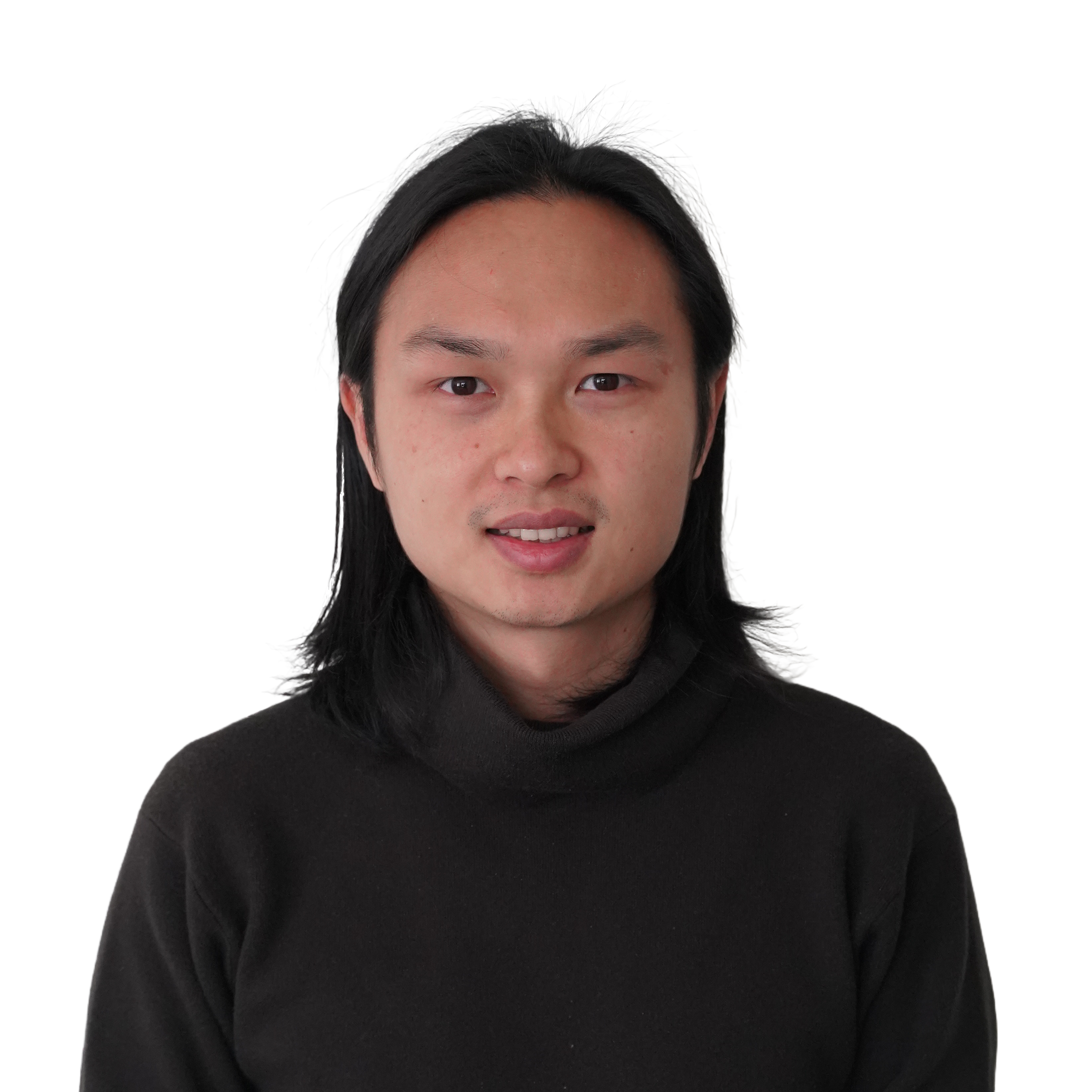
赵凯
副教授,上海大学
赵凯老师本科和硕士均毕业于上海大学,硕士导师是沈为教授 (现上海交通大学教授);2020年获南开大学计算机科学与技术专业博士学位, 师从程明明教授。 博士毕业后入选腾讯校招技术大咖(T9级技术专家,腾讯校招最高技术职级), 并在腾讯优图实验室担任高级研究员。 2022年起在加州大学洛杉矶分校(UCLA)从事博士后研究,2025年8月加入上海大学任教。
赵凯老师的研究领域主要包括计算机视觉和机器学习。 他在相关顶级期刊和会议上发表论文20余篇,包括 IEEE TPAMI、CVPR、NeurIPS、ICCV、ECCV等顶刊顶会, 多篇论文入选 ESI 高被引,谷歌学术总引用 6,000 余次。 赵凯老师关于掌纹识别的研究被《麻省理工科技评论》报道,并应用于微信刷掌支付、北京地铁大兴机场线刷掌入站中。赵凯老师是很多开源库(例如 PyTorch 和 mmdetection)的活跃贡献者。
Contact
联系方式
实验室招收本科实习生、考/保研硕士生和博士研究生。
欢迎对我们团队感兴趣的同学申请加入,请通过下方邮箱发送带照片的一页 PDF 简历。
- 南陈路333号上海大学东区12号楼527
- kzkaizhao.net(发邮件时请说明来意并尽量简洁直接)

Experience & Education
任职经历、教育背景
任职经历
2025.08 – 至今
副教授
上海大学
2022.03 – 2025.07
博士后
加州大学洛杉矶分校
2020.10 – 2022.02
高级研究员
腾讯优图实验室
2018.09 – 2019.01
研究实习生
松下研发中心(新加坡)
2016.07 – 2016.11
研究实习生
腾讯优图实验室
教育背景
2017.09 – 2020.06
博士,计算机科学与技术
南开大学
2014.09 – 2017.06
硕士
上海大学
2010.09 – 2014.06
本科
上海大学
Publications
代表性学术论文
- Kai Zhao and Alex Ling Yu Hung and Kaifeng Pang and Parsa Hajipour and Holden Wu and Steve Raman and Kyunghyun Sung, "PCa-Mamba: Spatiotemporal State Space Models for Prostate Cancer Detection in Multi-Parametric MRI", Medical Image Analysis, 2026. (影响因子=11.8, 中科院 1 区, Top期刊) DOI: 10.1016/j.media.2026.104033 [PDF] [Google Scholar]
- Kai Zhao, "Application of Artificial Intelligence in Gastrointestinal Disease", Diagnostics, 2026. DOI: 10.3390/diagnostics16050723 [PDF] [Google Scholar]
- Kai Zhao and Liting Ruan and Haoran Jiang and Xiaoqiang Zhu and Xianchao Zhang and Dan Zeng, "Beyond Predictive Resampling: Learning Input-Agnostic Downsampling for Efficient Aligned Vision Recognition", Proceedings of the AAAI Conference on Artificial Intelligence, 2026. (oral presentation, top 4.5%) DOI: 10.1609/aaai.v40i16.38319 [PDF] [Google Scholar]
- Kai Zhao and Wubang Yuan and Zheng Wang and Guanyi Li and Xiaoqiang Zhu and Deng-ping Fan and Dan Zeng, "Open-Vocabulary Camouflaged Object Segmentation with Cascaded Vision Language Models", Computational Visual Media, 2025. (影响因子=18.3) DOI: 10.26599/CVM.2025.9450512 [PDF, 中译版] [Google Scholar]
- Kaifeng Pang and Kai Zhao and Alex Ling Yu Hung and Haoxin Zheng and Ran Yan and Kyunghyun Sung, "NExpR: Neural Explicit Representation for fast arbitrary-scale medical image super-resolution", Computers in Biology and Medicine, 2025. (影响因子=7, 中科院 2 区) DOI: 10.1016/j.compbiomed.2024.109354 [PDF] [Google Scholar]
- Kai Zhao and Alex Ling Yu Hung and Kaifeng Pang and Haoxin Zheng and Kyunghyun Sung, "MRI Super-Resolution with Partial Diffusion Models", IEEE Transactions on Medical Imaging, 2024. (影响因子=11.3, 中科院 1 区, Top期刊) DOI: 10.1109/TMI.2024.3483109 [PDF] [Google Scholar]
- Kai Zhao and Zuojie He and Alex Hung and Dan Zeng, "Dominant Shuffle: A Simple Yet Powerful Data Augmentation for Time-series Prediction", arXiv:2405.16456, 2024. [Google Scholar]
- Kai Zhao and Kaifeng Pang and Alex LingYu Hung and Haoxin Zheng and Ran Yan and Kyunghyun Sung, "A Deep Learning-Based Framework for Highly Accelerated Prostate MR Dispersion Imaging", Cancers, 2024. (影响因子=4.5, 中科院 3 区) DOI: 10.3390/cancers16172983 [PDF] [Google Scholar]
- Alex Ling Yu Hung and Haoxin Zheng and Kai Zhao and Kaifeng Pang and Demetri Terzopoulos and Kyunghyun Sung, "Cross-Slice Attention and Evidential Critical Loss for Uncertainty-Aware Prostate Cancer Detection", International Conference on Medical Image Computing and Computer-Assisted Intervention, 2024. [Google Scholar]
- Kai Zhao and Tao Wang and Ruixin Zhang and Wei Shen, "Adaptive feature alignment for adversarial training", Pattern Recognition Letters, 2024. (影响因子=3.9, 中科院 3 区) DOI: j.patrec.2024.10.004 [PDF] [Google Scholar]
- Alex Ling Yu Hung and Kai Zhao and Haoxin Zheng and Ran Yan and Steven S Raman and Demetri Terzopoulos and Kyunghyun Sung, "Med-cDiff: Conditional medical image generation with diffusion models", Bioengineering, 2023. [Google Scholar]
- Yating Xu and Kai Zhao and Liangang Zhang and Mengyao Zhu and Dan Zeng, "Hyperspectral anomaly detection with vision transformer and adversarial refinement", International Journal of Remote Sensing, 2023. [Google Scholar]
- Kai Zhao and Lei Shen and Yingyi Zhang and Chuhan Zhou and Tao Wang and Ruixin Zhang and Shouhong Ding and Wei Jia and Wei Shen, "B'ezierpalm: A free lunch for palmprint recognition", European Conference on Computer Vision, 2022. DOI: 10.1007/978-3-031-19778-9_2 [PDF] [Google Scholar]
- Xuehui Wang and Kai Zhao and Ruixin Zhang and Shouhong Ding and Yan Wang and Wei Shen, "Contrastmask: Contrastive learning to segment every thing", Proceedings of the IEEE/CVF Conference on Computer Vision and Pattern Recognition, 2022. [Google Scholar]
- Lei Shen and Yingyi Zhang and Kai Zhao and Ruixin Zhang and Wei Shen, "Distribution alignment for cross-device palmprint recognition", Pattern Recognition, 2022. (影响因子=7.5, 中科院 1 区, Top期刊) DOI: 10.1016/j.patcog.2022.108942 [PDF] [Google Scholar]
- Jia Li and Junjie Zhang and Fansheng Chen and Kai Zhao and Dan Zeng, "Adaptive material matching for hyperspectral imagery destriping", IEEE Transactions on Geoscience and Remote Sensing, 2022. [Google Scholar]
- Kai Zhao and Xuehui Wang and Xingyu Chen and Ruixin Zhang and Wei Shen, "Rethinking mask heads for partially supervised instance segmentation", Neurocomputing, 2022. (影响因子=5.5, 中科院 2 区) DOI: 10.1016/j.neucom.2022.10.003 [PDF] [Google Scholar]
The list is generated from publications.bib. Please visit my Google Scholar for full publication list.
Academic Service
学术服务
- 上海市计算机学会计算机视觉专委会, 副秘书长;
- 中国电子学会信号处理分会, 青年委员;
- 会议审稿: CVPR, ICCV, ECCV, ICML, ICLR, NeurIPS, AISTAT, ACCV
- 期刊审稿: Nature Communications, IEEE TPAMI, IEEE TIP, IEEE TNNLS, IEEE TMM, Pattern Recognition
- Guest Editor: MDPI Diagnostics
Students & Interns
指导过的学生 / 实习生
- Katarina Chiam,UCLA,2023 级硕士生。
- Sohaib Naim,UCLA,2022 级博士生。
- 李润嘉,腾讯优图,实习生。去向:牛津大学 VGG 组博士。
- 庞凯风,UCLA,2022 级硕士生。去向:UCLA 攻读博士。
- Alex Hung,UCLA,2020 级博士生。
- 郑昊昕,UCLA,2020 级博士生。去向:亚马逊。
- 王雪辉,上海交通大学,2020 级博士生。
- 高尚华,南开大学,2018 级博士生。去向:哈佛大学博士后。
Graduate Training
研究生培养
基础课程
研究生阶段建议系统修读以下课程,提前做好准备将有助于更快地进入研究状态并取得科研成果。
- 费曼学习法
- 斯坦福-CS231n 深度学习和计算机视觉(b站搬运、中文讲解), 课程中的Python numpy矩阵编程教程也很重要, 要跟着教程实践
- 麻省理工学院-计算机科学教育中缺失的一课(中译版):重点了解 Shell Tools、Version Control (Git)、Debugging and Profiling、Metaprogramming 章节
- 动手学深度学习:教材+课程+代码
- 斯坦福 CS229 机器学习(2018年秋季)(b站搬运)
- 麻省理工学院-矩阵方法及其在信号处理和机器学习中的应用
- 斯坦福 CS234: 强化学习
- 计算机视觉中的多视角几何:经典教材,有中翻版(翻译质量一般),建议直接读英文版或中英对照;做3D相关研究的学生必修,其它学生可选修。
对于申请阶段的保研和考研学生,如能提前修读并通过相关课程(尤其是 CS231n、CS229),将在导师遴选时获得优先考虑,该课程内容也是面试的重要参考。
论文阅读
论文选择要求
- 优先看顶刊顶会论文;
- 优先选择顶级高校、科研机构、知名研究人员的论文;
- 注重广度:既要关注本领域前沿,也要涉猎相关与相邻方向,并主动学习其他领域中具有借鉴意义的方法;
- 优先选择代码和数据集公开的工作。
阅读深度要求
1. 问题层(Why)
- 为什么要做这个工作:这个问题的价值和意义是什么,解决它能带来什么影响;
- 为什么要这么做:作者为什么提出这个方案,其核心动机和出发点是什么;
要求能够用 3–5 句话准确概括论文"在解决什么问题,为什么重要,为什么这样做"。
2. 方法层(How)
- 理解方法的整体框架、模块组成和数据流,重点理解各模块的输入与输出,以及这些输入输出在计算机中的表示形式(例如,图像通常表示为尺寸为 H×W×3 的张量);
- 明确关键创新点及其设计动机;
- 说清方法与已有方法的本质差异。
3. 实验层(Evidence)
- 实验设计是否合理,数据集与评价指标是否匹配研究目标;
- 对比方法是否充分且公平;
- 消融实验是否有效验证核心假设;
- 代码和数据是否公开可得。
4. 反思与延展(Critical Thinking)
- 方法的隐含假设及可能失效的场景;
- 计算复杂度、工程实现与实际应用限制;
- 与自身研究方向的结合方式与潜在改进点。