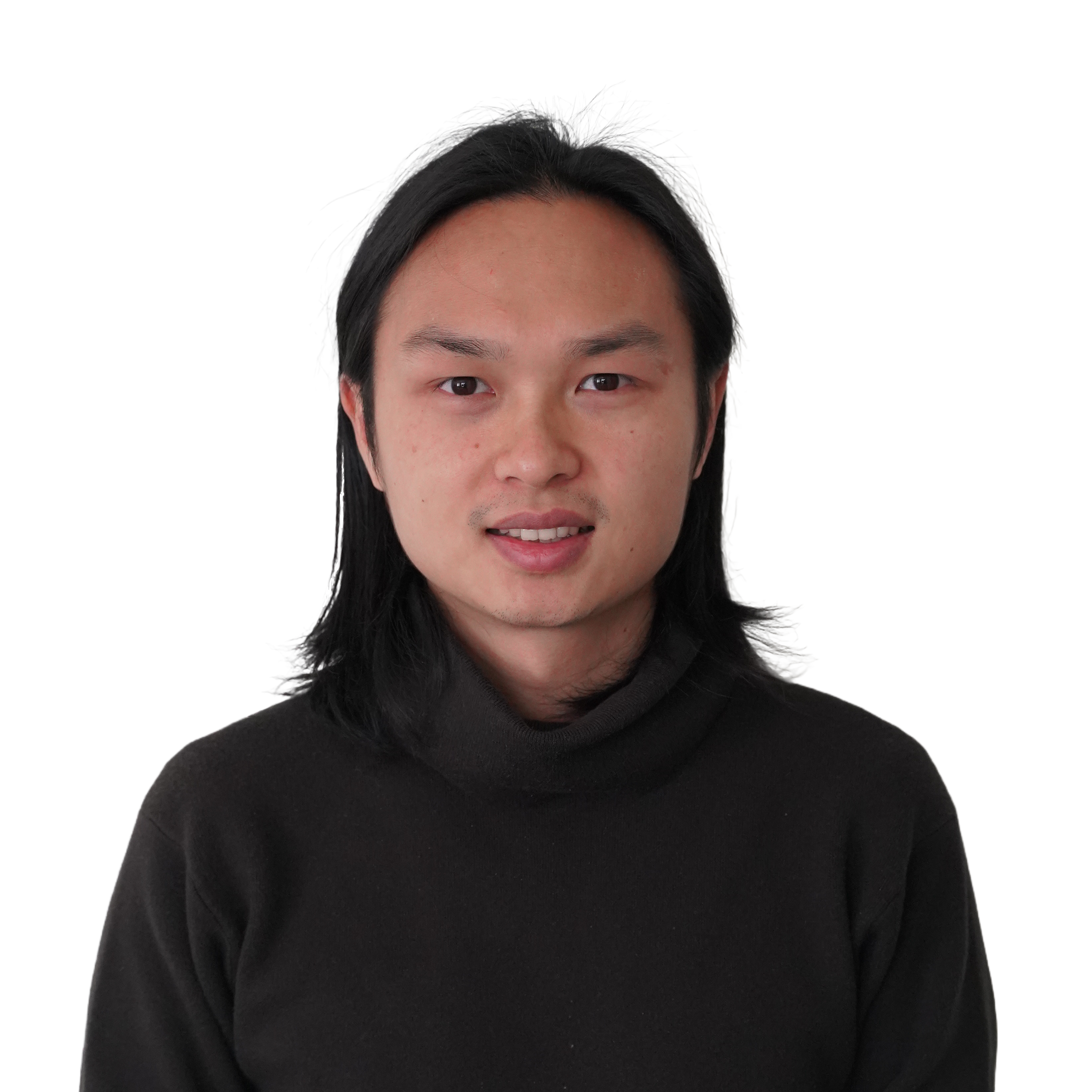
赵凯
副教授,上海大学
赵凯老师本科和硕士均毕业于上海大学,硕士导师是沈为教授 (现上海交通大学教授);2020年获南开大学计算机科学与技术专业博士学位, 师从程明明教授。 博士毕业后入选腾讯校招技术大咖(T9级技术专家,腾讯校招最高技术职级), 并在腾讯优图实验室担任高级研究员。 2022年起在加州大学洛杉矶分校(UCLA)从事博士后研究,2025年8月加入上海大学任教。
赵凯老师的研究领域主要包括计算机视觉和机器学习。 他在相关顶级期刊和会议上发表论文20余篇,包括 IEEE TPAMI、CVPR、NeurIPS、ICCV、ECCV等顶刊顶会, 多篇论文入选 ESI 高被引,谷歌学术总引用 6,000 余次。 赵凯老师关于掌纹识别的研究被《麻省理工科技评论》报道,并应用于微信刷掌支付、北京地铁大兴机场线刷掌入站中。赵凯老师是很多开源库(例如 PyTorch 和 mmdetection)的活跃贡献者。
Contact
联系方式
实验室招收本科实习生、考/保研硕士生和博士研究生。
- 欢迎对我们团队感兴趣的同学申请加入,请通过下方邮箱发送带照片的一页 PDF 简历。
- 团队在上海大学卓越工程师学院另有一个专硕招生名额,欢迎报考咨询。培养计划详见上海大学卓越工程师学院。
- 南陈路333号上海大学东区12号楼527
- kzkaizhao.net (来信务必简洁明确,直接说明来意。咨询研究生报考时,邮件正文只需写明姓名、所在学校及报考年份,其它简历中说明。)

Experience & Education
任职经历、教育背景
任职经历
2025.08 – 至今
副教授
上海大学
2022.03 – 2025.07
博士后
加州大学洛杉矶分校
2020.10 – 2022.02
高级研究员
腾讯优图实验室
2018.09 – 2019.01
研究实习生
松下研发中心(新加坡)
2016.07 – 2016.11
研究实习生
腾讯优图实验室
教育背景
2017.09 – 2020.06
博士,计算机科学与技术
南开大学
2014.09 – 2017.06
硕士
上海大学
2010.09 – 2014.06
本科
上海大学
Publications
代表性学术论文
- Kaifeng Pang and Kai Zhao and Qi Miao and Alex Ling Yu Hung and Changsuk Oh and Raymi Ramirez and Qiudi He and Jordan Klein and Wei Shao and Wayne Brisbane and Kyunghyun Sung, "Micro-ultrasound super-resolution with geometry-driven consistency models", Medical Image Analysis, 2026. (影响因子=14, 中科院 1 区, Top期刊) DOI: 10.1016/j.media.2026.104333 [PDF] [Google Scholar]
- Kai Zhao and Alex Ling Yu Hung and Kaifeng Pang and Parsa Hajipour and Holden Wu and Steve Raman and Kyunghyun Sung, "PCa-Mamba: Spatiotemporal State Space Models for Prostate Cancer Detection in Multi-Parametric MRI", Medical Image Analysis, 2026. (影响因子=14, 中科院 1 区, Top期刊) DOI: 10.1016/j.media.2026.104033 [PDF] [Google Scholar]
- Kai Zhao, "Application of Artificial Intelligence in Gastrointestinal Disease", Diagnostics, 2026. DOI: 10.3390/diagnostics16050723 [PDF] [Google Scholar]
- Kai Zhao and Liting Ruan and Haoran Jiang and Xiaoqiang Zhu and Xianchao Zhang and Dan Zeng, "Beyond Predictive Resampling: Learning Input-Agnostic Downsampling for Efficient Aligned Vision Recognition", Proceedings of the AAAI Conference on Artificial Intelligence, 2026. (oral presentation, top 4.5%) DOI: 10.1609/aaai.v40i16.38319 [PDF] [Google Scholar]
- Kai Zhao and Wubang Yuan and Zheng Wang and Guanyi Li and Xiaoqiang Zhu and Deng-ping Fan and Dan Zeng, "Open-Vocabulary Camouflaged Object Segmentation with Cascaded Vision Language Models", Computational Visual Media, 2025. (影响因子=18.3) DOI: 10.26599/CVM.2025.9450512 [PDF, 中译版] [Google Scholar]
- Kaifeng Pang and Kai Zhao and Alex Ling Yu Hung and Haoxin Zheng and Ran Yan and Kyunghyun Sung, "NExpR: Neural Explicit Representation for fast arbitrary-scale medical image super-resolution", Computers in Biology and Medicine, 2025. (影响因子=7, 中科院 2 区) DOI: 10.1016/j.compbiomed.2024.109354 [PDF] [Google Scholar]
- Kai Zhao and Alex Ling Yu Hung and Kaifeng Pang and Haoxin Zheng and Kyunghyun Sung, "MRI Super-Resolution with Partial Diffusion Models", IEEE Transactions on Medical Imaging, 2024. (影响因子=11.3, 中科院 1 区, Top期刊) DOI: 10.1109/TMI.2024.3483109 [PDF] [Google Scholar]
- Kai Zhao and Zuojie He and Alex Hung and Dan Zeng, "Dominant Shuffle: A Simple Yet Powerful Data Augmentation for Time-series Prediction", arXiv:2405.16456, 2024. [Google Scholar]
- Kai Zhao and Kaifeng Pang and Alex LingYu Hung and Haoxin Zheng and Ran Yan and Kyunghyun Sung, "A Deep Learning-Based Framework for Highly Accelerated Prostate MR Dispersion Imaging", Cancers, 2024. (影响因子=4.5, 中科院 3 区) DOI: 10.3390/cancers16172983 [PDF] [Google Scholar]
- Alex Ling Yu Hung and Haoxin Zheng and Kai Zhao and Kaifeng Pang and Demetri Terzopoulos and Kyunghyun Sung, "Cross-Slice Attention and Evidential Critical Loss for Uncertainty-Aware Prostate Cancer Detection", International Conference on Medical Image Computing and Computer-Assisted Intervention, 2024. [Google Scholar]
- Kai Zhao and Tao Wang and Ruixin Zhang and Wei Shen, "Adaptive feature alignment for adversarial training", Pattern Recognition Letters, 2024. (影响因子=3.9, 中科院 3 区) DOI: j.patrec.2024.10.004 [PDF] [Google Scholar]
- Alex Ling Yu Hung and Kai Zhao and Haoxin Zheng and Ran Yan and Steven S Raman and Demetri Terzopoulos and Kyunghyun Sung, "Med-cDiff: Conditional medical image generation with diffusion models", Bioengineering, 2023. [Google Scholar]
- Yating Xu and Kai Zhao and Liangang Zhang and Mengyao Zhu and Dan Zeng, "Hyperspectral anomaly detection with vision transformer and adversarial refinement", International Journal of Remote Sensing, 2023. [Google Scholar]
- Kai Zhao and Lei Shen and Yingyi Zhang and Chuhan Zhou and Tao Wang and Ruixin Zhang and Shouhong Ding and Wei Jia and Wei Shen, "B'ezierpalm: A free lunch for palmprint recognition", European Conference on Computer Vision, 2022. DOI: 10.1007/978-3-031-19778-9_2 [PDF] [Google Scholar]
- Xuehui Wang and Kai Zhao and Ruixin Zhang and Shouhong Ding and Yan Wang and Wei Shen, "Contrastmask: Contrastive learning to segment every thing", Proceedings of the IEEE/CVF Conference on Computer Vision and Pattern Recognition, 2022. [Google Scholar]
- Lei Shen and Yingyi Zhang and Kai Zhao and Ruixin Zhang and Wei Shen, "Distribution alignment for cross-device palmprint recognition", Pattern Recognition, 2022. (影响因子=7.5, 中科院 1 区, Top期刊) DOI: 10.1016/j.patcog.2022.108942 [PDF] [Google Scholar]
- Jia Li and Junjie Zhang and Fansheng Chen and Kai Zhao and Dan Zeng, "Adaptive material matching for hyperspectral imagery destriping", IEEE Transactions on Geoscience and Remote Sensing, 2022. [Google Scholar]
- Kai Zhao and Xuehui Wang and Xingyu Chen and Ruixin Zhang and Wei Shen, "Rethinking mask heads for partially supervised instance segmentation", Neurocomputing, 2022. (影响因子=5.5, 中科院 2 区) DOI: 10.1016/j.neucom.2022.10.003 [PDF] [Google Scholar]
The list is generated from publications.bib. Please visit my Google Scholar for full publication list.
Academic Service
学术服务
- 上海市计算机学会计算机视觉专委会, 副秘书长;
- 中国电子学会信号处理分会, 青年委员;
- 会议审稿: CVPR, ICCV, ECCV, ICML, ICLR, NeurIPS, AISTAT, ACCV
- 期刊审稿: Nature Communications, IEEE TPAMI, IEEE TIP, IEEE TNNLS, IEEE TMM, Pattern Recognition
- Guest Editor: MDPI Diagnostics
Students & Interns
指导过的学生 / 实习生
- Katarina Chiam,UCLA,2023 级硕士生。
- Sohaib Naim,UCLA,2022 级博士生。
- 李润嘉,腾讯优图,实习生。去向:牛津大学 VGG 组博士。
- 庞凯风,UCLA,2022 级硕士生。去向:UCLA 攻读博士。
- Alex Hung,UCLA,2020 级博士生。
- 郑昊昕,UCLA,2020 级博士生。去向:亚马逊。
- 王雪辉,上海交通大学,2020 级博士生。
- 高尚华,南开大学,2018 级博士生。去向:哈佛大学博士后。
Graduate Training
研究生培养
基础课程
研究生阶段建议系统修读以下课程,提前做好准备将有助于更快地进入研究状态并取得科研成果。
- 费曼学习法
- 斯坦福-CS231n 深度学习和计算机视觉(b站搬运、中文讲解), 课程中的Python numpy矩阵编程教程也很重要, 要跟着教程实践
- 麻省理工学院-计算机科学教育中缺失的一课(中译版):重点了解 Shell Tools、Version Control (Git)、Debugging and Profiling、Metaprogramming 章节
- 动手学深度学习:教材+课程+代码
- 斯坦福 CS229 机器学习(2018年秋季)(b站搬运)
- 麻省理工学院-矩阵方法及其在信号处理和机器学习中的应用
- 斯坦福 CS234: 强化学习
- 计算机视觉中的多视角几何:经典教材,有中翻版(翻译质量一般),建议直接读英文版或中英对照;做3D相关研究的学生必修,其它学生可选修。
对于申请阶段的保研和考研学生,如能提前修读并通过相关课程(尤其是 CS231n、CS229),将在导师遴选时获得优先考虑,该课程内容也是面试的重要参考。
论文阅读
论文选择要求
- 优先看顶刊顶会论文;
- 优先选择顶级高校、科研机构、知名研究人员的论文;
- 注重广度:既要关注本领域前沿,也要涉猎相关与相邻方向,并主动学习其他领域中具有借鉴意义的方法;
- 优先选择代码和数据集公开的工作。
阅读深度要求
1. 问题层(Why)
- 为什么要做这个工作:这个问题的价值和意义是什么,解决它能带来什么影响;
- 为什么要这么做:作者为什么提出这个方案,其核心动机和出发点是什么;
要求能够用 3–5 句话准确概括论文"在解决什么问题,为什么重要,为什么这样做"。
2. 方法层(How)
- 理解方法的整体框架、模块组成和数据流,重点理解各模块的输入与输出,以及这些输入输出在计算机中的表示形式(例如,图像通常表示为尺寸为 H×W×3 的张量);
- 明确关键创新点及其设计动机;
- 说清方法与已有方法的本质差异。
3. 实验层(Evidence)
- 实验设计是否合理,数据集与评价指标是否匹配研究目标;
- 对比方法是否充分且公平;
- 消融实验是否有效验证核心假设;
- 代码和数据是否公开可得。
4. 反思与延展(Critical Thinking)
- 方法的隐含假设及可能失效的场景;
- 计算复杂度、工程实现与实际应用限制;
- 与自身研究方向的结合方式与潜在改进点。